




An Emergency Lighting Ni-Cd Battery must remain ready to supply backup power whenever the normal electricity supply fails. However, prolonged standby charging, excessive heat, poor electrical connections, and improper discharge practices can gradually reduce battery capacity and emergency operating time. Proper Ni-Cd emergency light battery maintenance involves regular visual inspections, monthly functional testing, annual backup duration testing, and correct charging management. By monitoring battery capacity, standby charging performance, and discharge test results, facility managers can reduce unexpected failures and maintain reliable emergency lighting when occupants need it most.
Emergency lighting systems may remain connected to the mains supply for months without experiencing a power failure. During this time, the Ni-Cd battery continuously maintains its charge so that it can provide backup power immediately when required.
Although nickel-cadmium batteries are known for their durability and ability to operate under demanding conditions, they are not immune to aging or improper maintenance. Their performance can deteriorate because of several factors:
Capacity degradation: Repeated charging, aging, and unsuitable operating conditions gradually reduce the amount of energy the battery can deliver.
Improper charging: An unsuitable charging current or prolonged overcharging can increase internal temperature and accelerate battery deterioration.
High operating temperature: Excessive heat increases electrochemical aging and may shorten the battery's service life.
Deep discharge: Leaving a discharged battery connected to the emergency lighting circuit for an extended period can damage individual cells.
Connection problems: Loose connectors, oxidation, and damaged wiring can interrupt charging or increase voltage drop during emergency operation.
Cell imbalance: Differences in individual cell capacity can cause one weak cell to reach its discharge limit before the others.
These problems directly affect emergency lighting battery backup runtime. A battery may still activate an emergency lamp during a short test but fail to maintain illumination throughout its required operating duration.
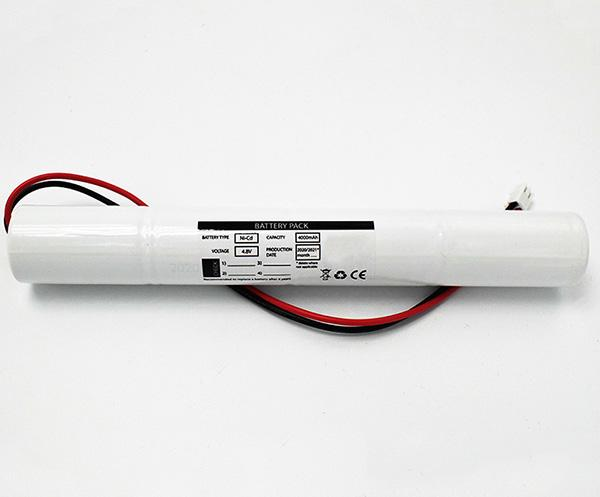
Before starting a maintenance procedure, collect the battery specifications, luminaire instructions, and necessary inspection equipment. Different Ni-Cd battery packs have different charging requirements, discharge limits, and operating temperature ratings. Using an incorrect maintenance procedure may cause more damage than the original problem.
| Tool or Material | Purpose |
|---|---|
| Digital multimeter | Measures battery voltage and helps identify abnormal electrical conditions. |
| Battery capacity tester | Evaluates available battery capacity under a controlled discharge load. |
| Timer or stopwatch | Records emergency lighting operating duration. |
| Temperature meter | Checks the battery's operating environment and identifies abnormal heating. |
| Insulated tools | Reduces the risk of accidental short circuits during authorized maintenance. |
| Protective equipment | Provides appropriate protection when inspecting or servicing electrical equipment. |
| Battery specification sheet | Confirms nominal voltage, capacity, charging current, and discharge limits. |
| Maintenance logbook | Records inspection dates, test results, faults, and replacement history. |
Ni-Cd batteries contain cadmium, a toxic heavy metal. Although sealed emergency lighting battery packs generally require no electrolyte servicing, damaged cells and packs must be handled carefully.
Ensure maintenance is performed by appropriately qualified personnel.
Follow the luminaire and battery manufacturer's maintenance instructions.
Isolate the relevant electrical supply before opening the luminaire or handling battery connections.
Never short-circuit battery terminals or reverse the polarity.
Do not open sealed battery cells or attempt to add water or electrolyte.
Do not continue using batteries with leakage, damaged insulation, or deformed cells.
Arrange alternative emergency lighting provisions before performing tests that temporarily reduce backup availability.
Send discarded Ni-Cd batteries to an authorized battery recycling facility rather than disposing of them with ordinary waste.
A practical Ni-Cd battery maintenance procedure should cover the battery's physical condition, charging performance, emergency activation, discharge capacity, and long-term service records. The following steps provide a systematic approach for facility managers, electrical maintenance technicians, and emergency lighting service providers.
Start with a visual inspection of the Emergency Lighting Ni-Cd Battery and its surrounding electrical components.
Check the following areas:
Battery casing for cracks, deformation, or leakage.
Battery connectors for looseness, oxidation, or corrosion.
Electrical wires for damaged insulation or exposed conductors.
Battery compartment for dust, moisture, and accumulated debris.
Charging indicator for abnormal flashing or fault signals.
Luminaire housing for heat discoloration or physical damage.
Pay particular attention to the battery's appearance. A swollen or leaking battery pack should be removed from service and replaced according to the manufacturer's procedure.
For sealed Ni-Cd battery packs, maintenance generally focuses on external inspection rather than electrolyte adjustment. Do not dismantle the pack to inspect individual cells unless the manufacturer specifically authorizes this procedure.
Proper charging is essential because emergency lighting batteries normally remain connected to a charging circuit during standby operation.
Check whether the charging indicator operates normally and whether the battery receives the charging current specified by its manufacturer.
Two important charging concepts should be understood:
Trickle charging: A low-rate charging method used in certain battery systems to compensate for self-discharge and maintain readiness.
Constant-current charging: A charging method that maintains a specified current during the charging period, subject to the battery's approved charging profile.
For example, the Godson Technology Co., Ltd. 2GS-D400T-A Ni-Cd battery pack has a nominal capacity of 4,000mAh and specifies a standard charging mode of 0.1C for 16 hours.
In this example, 0.1C corresponds to a charging current of approximately 400mA for the 4Ah battery. This illustrates why charging current and charging time must be matched to the actual battery specification rather than selected through guesswork.
During inspection, check for:
Abnormal charging voltage or current.
Unusual battery temperature increases.
Charging indicators that remain in a fault condition.
Loose battery connections.
Charging interruptions or inconsistent charging behavior.
If the battery does not recharge correctly, investigate the charger, wiring, and battery condition before replacing the pack.
A monthly functional test checks whether the emergency lighting system can switch from normal mains power to battery power when an electrical failure occurs.
Follow this procedure:
Check the normal operating condition. Confirm that the emergency luminaire is connected to the mains supply and that its charging indicator shows the expected status.
Simulate a mains power failure. Use the approved test switch or electrical isolation procedure to activate emergency mode.
Observe the emergency light. Confirm that the LED or other light source illuminates correctly using battery power.
Check the operating condition. Look for flickering, abnormal dimming, delayed activation, or intermittent illumination.
Restore the normal power supply. Return the system to its standard operating condition.
Verify battery charging recovery. Confirm that the charging indicator returns to its expected state.
Record the results. Document the test date, equipment identification, and any identified faults.
Under EN 50172:2024, the monthly test should activate each emergency luminaire for long enough to confirm that its light source operates. Other local regulations may specify additional test durations or procedures.
Remember that a successful short functional test does not prove that the battery has sufficient capacity to support the complete emergency lighting duration.
The annual duration test is one of the most important procedures for evaluating actual Ni-Cd battery performance.
Unlike a monthly functional test, which mainly confirms emergency activation, a duration test evaluates whether the battery can continuously supply the emergency lighting load for the required operating period.
For example, if an emergency luminaire has a rated backup duration of 3 hours, the applicable full-duration test should establish whether the battery can maintain the required operation for that period.
Follow these steps:
Fully charge the battery. Allow the battery to complete its specified charging period before testing.
Prepare the test environment. Arrange the test during a low-risk period and ensure that alternative safety arrangements are available where necessary.
Activate emergency mode. Simulate a mains power failure using the approved testing procedure.
Start the timer. Record the time when the battery begins supplying the emergency lighting load.
Monitor illumination. Observe whether the emergency light maintains the required operating performance throughout the test.
Record the actual duration. Compare the measured operating time with the rated emergency duration.
Restore mains power. Return the luminaire to normal operation and confirm that charging resumes.
In UK practice, BS 5266-1 provides for full rated-duration testing at least annually. The exact testing requirements should always follow the regulations applicable to the installation.
Do not conduct unnecessary full-discharge tests between scheduled inspections. Excessive discharge cycling can increase battery wear and temporarily reduce emergency backup availability.
Temperature is an important factor affecting Ni-Cd battery service life.
Emergency lighting luminaires are sometimes installed in ceilings, corridors, industrial facilities, warehouses, and equipment rooms where ambient temperatures can vary considerably.
High temperatures can accelerate electrochemical aging, increase self-discharge, and reduce long-term capacity retention. Low temperatures can also affect the available discharge capacity.
During routine maintenance:
Check whether the battery is installed near heat-producing equipment.
Ensure that ventilation openings are not obstructed.
Inspect the battery compartment for abnormal heat accumulation.
Avoid installing replacement batteries outside their specified operating temperature range.
Compare measured temperatures with the manufacturer's battery specifications.
For reference, the Godson 2GS-D400T-A Ni-Cd battery pack specifies an operating temperature range of -20°C to +70°C. This is a model-specific rating and should not be applied to every Ni-Cd battery.
Where emergency lights operate in consistently hot environments, maintenance teams should pay particular attention to battery aging and actual backup duration.
Electrical connection problems can cause emergency lighting failures even when the battery cells themselves remain functional.
For example, a loose connector can increase contact resistance, causing voltage drop when the emergency LED draws current from the battery.
Inspect the following components:
Battery plug and socket.
Positive and negative terminals.
Connecting wires and insulation.
Crimped connections and approved contact points.
Battery-to-driver electrical connections.
If dust or contamination is present, clean the accessible external surfaces using a method approved by the equipment manufacturer. Replace damaged or heavily corroded connectors rather than attempting an unreliable repair.
After maintenance, qualified technicians should verify correct polarity and secure electrical connections before restoring the equipment to operation.
Battery voltage alone cannot accurately determine whether an aging Ni-Cd battery can provide the required emergency operating duration.
A battery may show an apparently normal open-circuit voltage but experience significant voltage reduction when connected to an emergency lighting load.
Three measurements are particularly useful:
Open-circuit voltage: Helps identify abnormal voltage conditions when the battery is not supplying a load.
Loaded voltage: Shows how the battery voltage behaves when supplying the emergency lighting circuit.
Discharge duration: Measures how long the battery can maintain the required emergency lighting operation.
Internal resistance is another useful diagnostic parameter. As battery cells age, increasing internal resistance can contribute to voltage sag during discharge.
If a battery repeatedly fails its rated-duration test, investigate whether the problem comes from reduced battery capacity, an unsuitable charging profile, cell imbalance, or an abnormal emergency lighting load.
Even when an Emergency Lighting Ni-Cd Battery receives regular maintenance, its electrochemical performance gradually deteriorates.
Consider battery replacement when:
The battery repeatedly fails the required duration test.
The available backup time falls below the specified requirement.
The battery has visible leakage or physical deformation.
The charging system cannot restore the battery to its expected condition.
The battery has reached its manufacturer's recommended service-life limit.
Repeated electrical faults indicate that the pack is no longer reliable.
When selecting a replacement battery, verify the following specifications:
Battery chemistry: Ni-Cd.
Nominal voltage.
Rated capacity in mAh or Ah.
Cell configuration and dimensions.
Connector type and polarity.
Discharge characteristics.
Charging current and charging time.
Operating temperature range.
For series-connected battery packs, replacing the complete matched pack is generally preferable to mixing new cells with aged cells of different capacities and internal resistance, unless the manufacturer provides a specific cell-replacement procedure.
After replacement, complete the required initial charging and commissioning tests before returning the emergency luminaire to normal service.
A useful example comes from a documented maintenance project at St Vincent's Care Services in Australia.
During an assessment of an emergency lighting installation at its Toowoomba facility, the maintenance team identified ongoing failures involving 73 emergency and exit lights fitted with Ni-Cd batteries and manual testing systems.
The published case study reported approximately AUD 63,500 in maintenance and testing costs over a 10-year period. Testing every six months was revealing repeated equipment failures, while incomplete maintenance records made it difficult to identify individual fittings, their locations, and previous maintenance activities.
Following an audit, the project identified an opportunity to reduce costs by approximately AUD 46,700, representing an estimated 81% saving over 10 years through an upgrade to an automated emergency lighting system using a different battery technology.
These figures relate to that specific facility and its overall maintenance and testing arrangements. They should not be interpreted as a universal Ni-Cd battery failure rate or a guaranteed saving for other buildings.
However, the case demonstrates three important maintenance lessons:
Testing records matter. Every emergency luminaire should have an identifiable maintenance history, including battery replacement dates and duration-test results.
Repeated failures need investigation. Replacing batteries without checking chargers, connections, and testing procedures may leave the underlying problem unresolved.
Preventive maintenance supports cost control. A structured maintenance programme helps identify aging batteries before they fail during an actual power outage.
For facility managers, the most valuable approach is to use measured battery performance and traceable maintenance records rather than relying solely on battery age or indicator lights.
| Common Mistake | Why It Causes Problems | Recommended Solution |
|---|---|---|
| Ignoring monthly functional tests | Battery and electrical faults may remain undetected until an actual emergency. | Follow the required monthly emergency lighting inspection schedule. |
| Performing unnecessary deep discharges | Excessive discharge cycles increase battery wear and reduce system availability. | Follow the approved functional and duration testing schedule. |
| Using an incompatible charger | Incorrect charging current or voltage can damage cells or prevent full charging. | Match the charger to the battery manufacturer's charging specifications. |
| Checking voltage without testing capacity | Normal open-circuit voltage does not prove sufficient backup runtime. | Perform an appropriate controlled discharge or rated-duration test. |
| Ignoring high temperatures | Thermal stress can accelerate capacity degradation. | Monitor the operating environment and maintain suitable ventilation. |
| Replacing only one cell in an aged pack | Differences in capacity and internal resistance can create cell imbalance. | Use a complete matched replacement pack when specified by the manufacturer. |
| Mixing different battery specifications | Voltage, capacity, and charging characteristics may not match the emergency driver. | Verify chemistry, voltage, capacity, dimensions, and connector compatibility. |
| Failing to record test results | Battery aging and recurring equipment faults become difficult to track. | Maintain an individual maintenance record for each emergency luminaire. |
| Ignoring recharge time after testing | The battery may remain below full capacity when another power failure occurs. | Allow the manufacturer-specified recharge period before relying on the system. |
A structured inspection schedule makes battery maintenance easier to manage and reduces the possibility of overlooking important testing procedures.
| Maintenance Frequency | Inspection and Maintenance Activities | Main Objective |
|---|---|---|
| Daily or routine site checks | Review central system indicators and reported faults. Check visible damage where applicable. | Identify abnormal operating conditions. |
| Monthly | Conduct a short functional test, check emergency activation, inspect indicators, and record results. | Verify normal emergency switching and operation. |
| Annually | Conduct the required full rated-duration test, inspect the battery, assess backup performance, and document results. | Verify available emergency operating duration. |
| After battery replacement | Verify polarity, connections, charging operation, and emergency lighting performance. | Confirm correct installation and commissioning. |
| After an abnormal test result | Investigate battery capacity, charging equipment, wiring, and emergency lighting load. | Identify the root cause and prevent repeated failures. |
Important: Testing intervals and discharge durations must comply with the applicable national regulations, building requirements, and manufacturer's instructions. For example, EN 50172:2024 specifies monthly emergency-mode activation and inspection requirements, while other applicable standards provide additional annual testing requirements.
Proper maintenance of an Emergency Lighting Ni-Cd Battery requires more than checking whether the charging indicator is illuminated. Facility managers need to monitor battery condition, charging performance, emergency activation, and actual backup duration throughout the battery's service life.
The most effective approach is straightforward: perform regular visual inspections, complete monthly functional tests, conduct the required annual duration tests, control operating temperature, and replace batteries that no longer meet their specified performance requirements.
When evaluating Ni-Cd battery service life, pay particular attention to self-discharge, thermal stress, and terminal corrosion. These factors can affect charge retention and emergency lighting reliability even when a battery appears normal during routine standby operation.
For manufacturers, distributors, and emergency lighting maintenance contractors, selecting an appropriately designed battery is equally important. Godson Technology Co., Ltd. provides rechargeable Ni-Cd battery solutions for emergency lighting applications, with different voltage, capacity, and cell configurations available for different equipment requirements.
Before purchasing a replacement pack, verify its rated discharge current, end-of-discharge voltage, and compatibility with the original charging circuit. Combining correct battery selection with a documented maintenance programme helps maintain dependable emergency luminaire backup performance and reduces unexpected replacement costs.
Emergency lighting batteries should generally receive a short functional test every month and the applicable full rated-duration test at least annually where required by local regulations. Monthly testing confirms that the emergency light activates when mains power fails, while duration testing verifies that the battery can supply the required backup power for the specified period.
All inspection and test results should be recorded in the emergency lighting maintenance logbook.
The service life depends on battery quality, operating temperature, charging conditions, discharge frequency, and luminaire design.
For example, the Godson 2GS-D400T-A Ni-Cd battery pack specifies an expected life of 5 years and a cycle life of at least 500 cycles. These are product-specific specifications rather than a universal service-life guarantee.
Actual replacement decisions should be based on the manufacturer's recommendations and measured battery performance.
A controlled full-duration discharge test may be necessary to verify emergency backup capacity. However, repeatedly performing unnecessary deep-discharge cycles is not recommended.
Excessive discharge can accelerate battery wear, and continuing to discharge a series-connected pack beyond its specified cutoff may cause a weak cell to undergo polarity reversal. Follow the manufacturer's discharge limits and recharge the battery promptly after testing.
Common warning signs include reduced emergency operating time, abnormal voltage drop under load, repeated charging faults, physical deformation, leakage, and failure to complete the required duration test.
If a battery repeatedly fails after receiving the correct charging procedure, investigate the battery and charging circuit. Replace the battery pack when it can no longer meet the required performance specifications.
Not without confirming that the emergency lighting equipment is designed and approved for the alternative battery chemistry.
Ni-Cd, Ni-MH, and LiFePO4 batteries have different charging characteristics, voltage ranges, discharge profiles, and protection requirements. Simply selecting a battery with the same nominal voltage does not guarantee compatibility.
Always verify the emergency driver's specifications, charger compatibility, battery dimensions, capacity, connector, and applicable product safety requirements before changing battery chemistry.


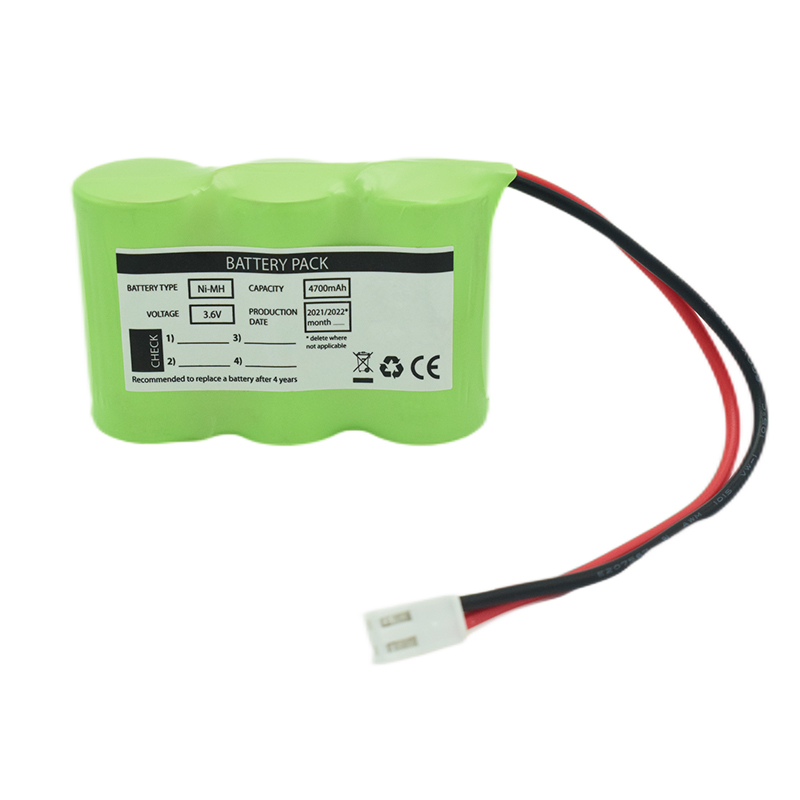 Ni-MH Battery C4700mAh 3.6V
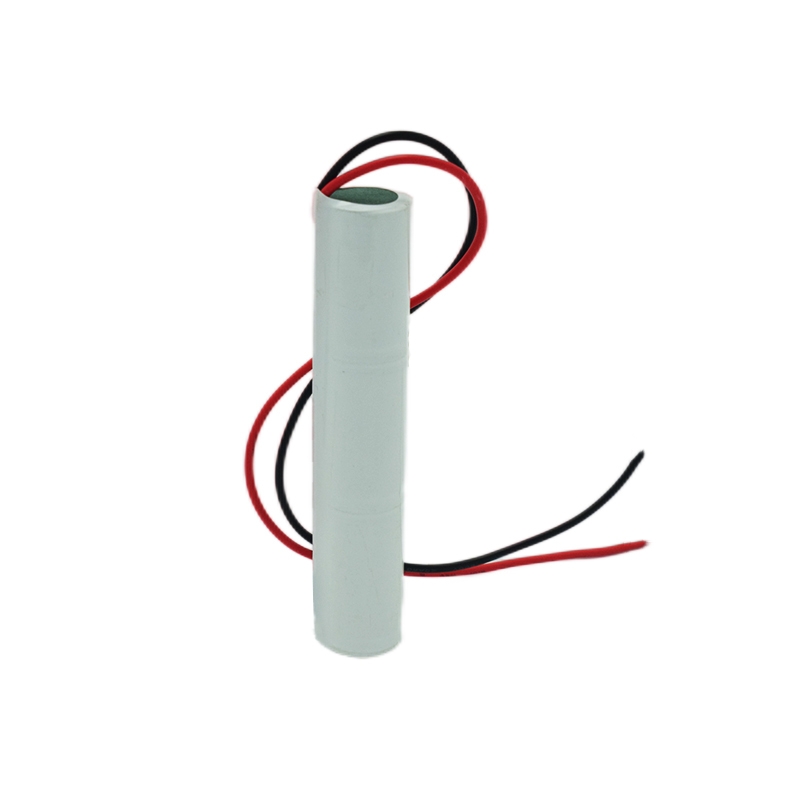 Nickel Cadmium Nicd Battery Pack SC1800mAh 3.6V
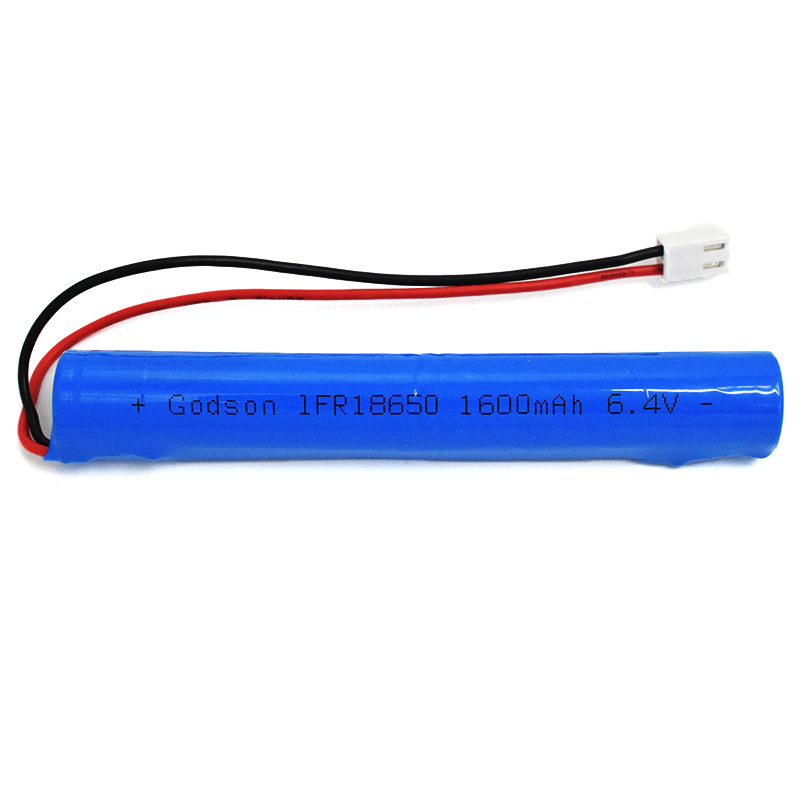 LiFePO4 IFR18650 1600mAh 6.4V
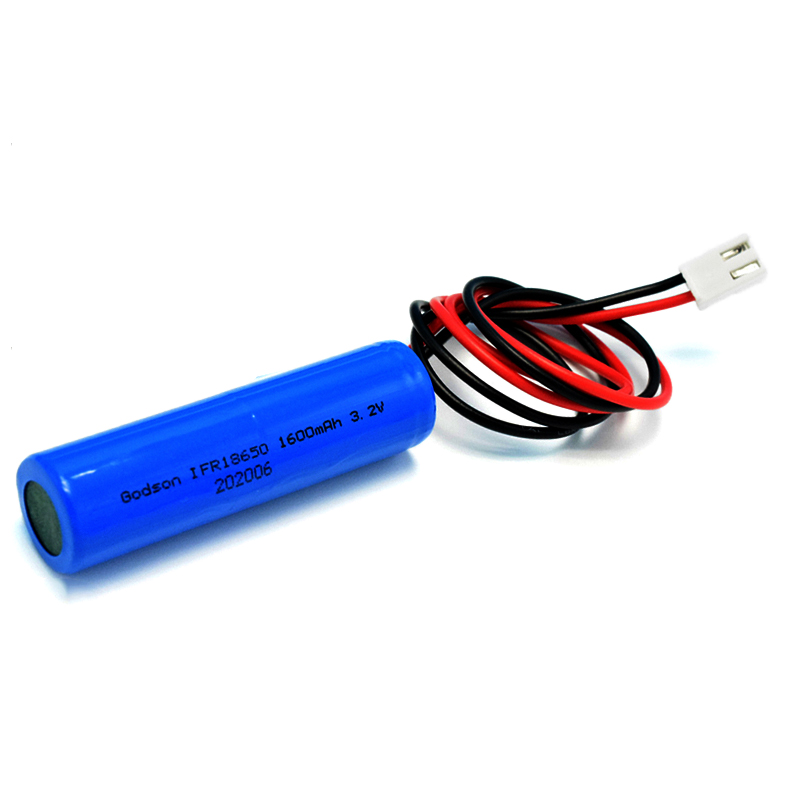 LiFePO4 IFR18650 1600mAh 3.2V
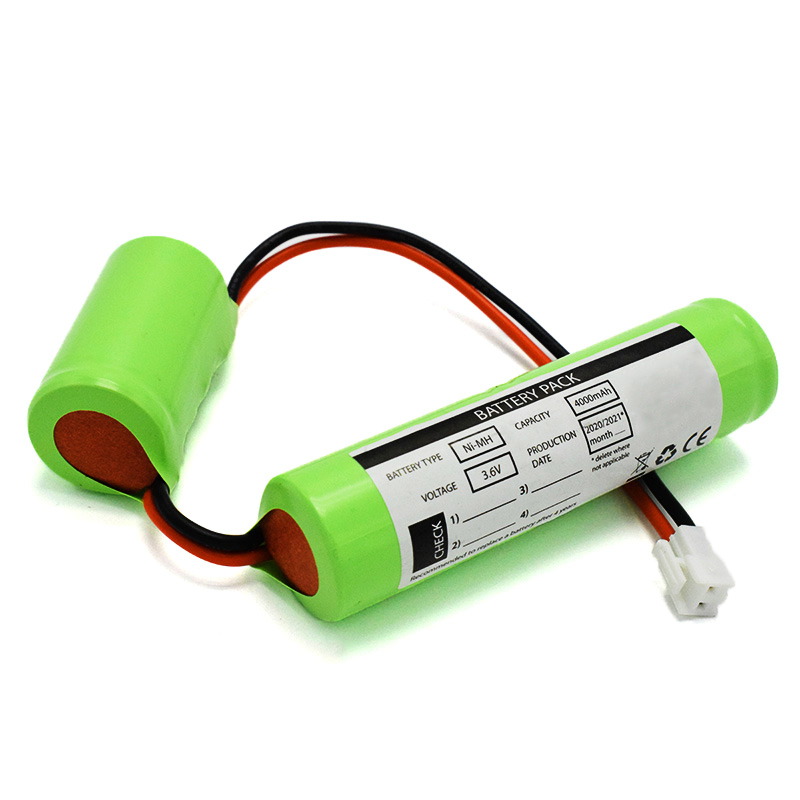 Ni-MH Battery C4000mAh 3.6V
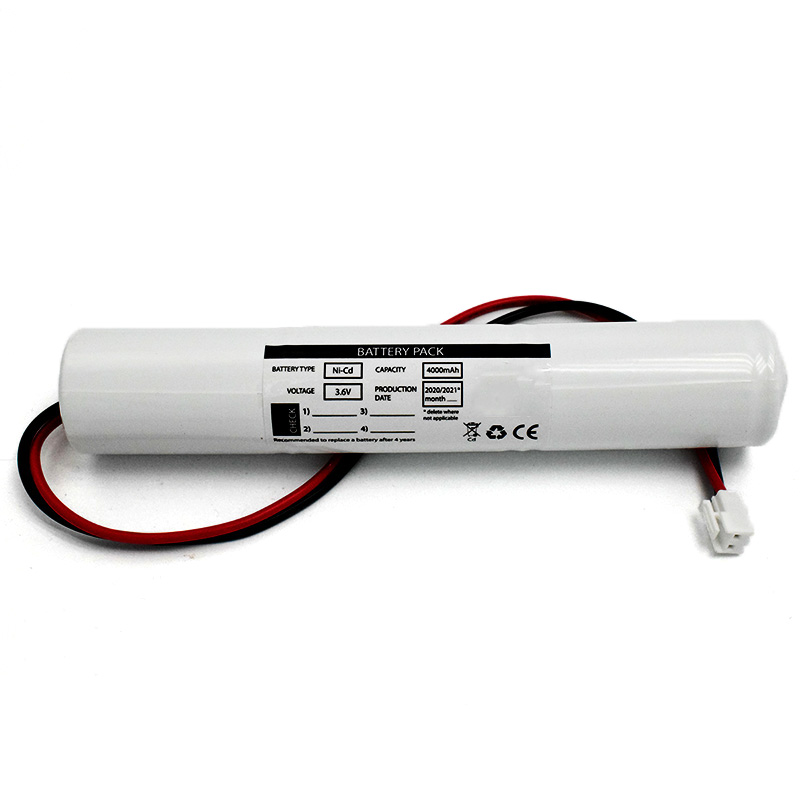 Ni-Cd Battery Pack D4000mAh 3.6V
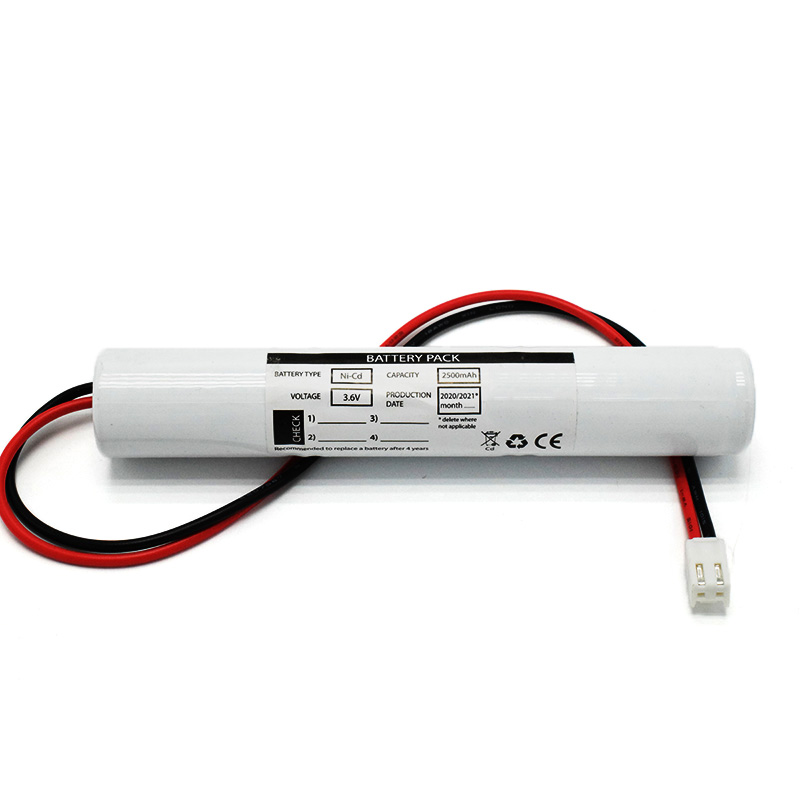 Ni-Cd Battery Pack C2500mAh 3.6V
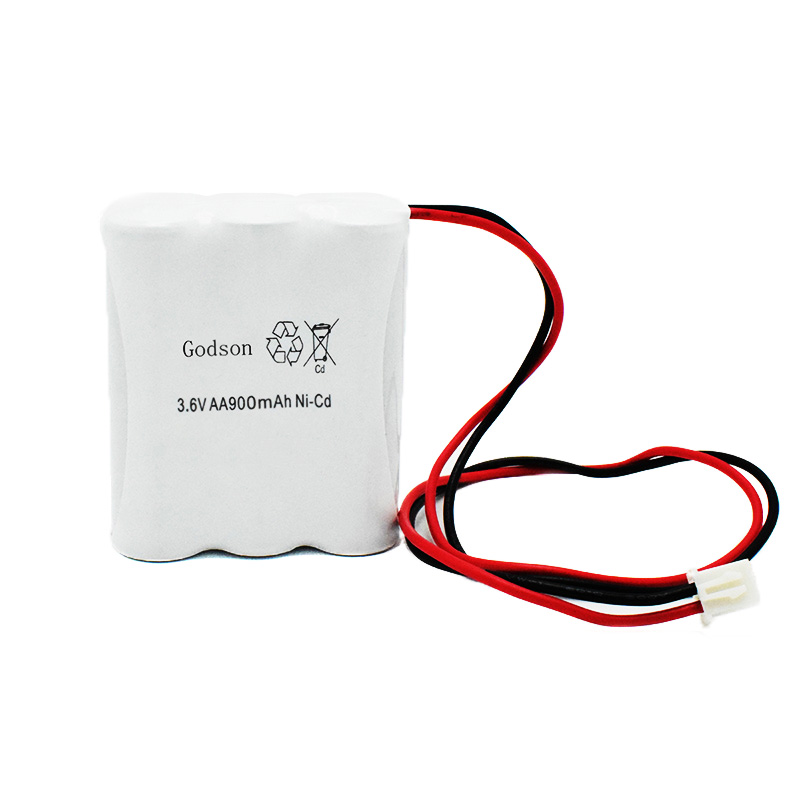 NICAD Battery Pack AA900mAh 3.6V
 Power Tool Battery Bosch-18V Ni-Cd/Ni-MH
 Power Tool Battery Dewalt 24V Ni-Cd/Ni-MH