




Emergency lighting systems must work when the main power supply fails. However, an Emergency Lighting Ni-Cd Battery may gradually lose usable capacity or fail a discharge test if it is repeatedly charged and discharged under unsuitable conditions. The solution is not to deep-discharge every battery regularly. Instead, identify whether the problem is genuine memory effect, voltage depression, incomplete charging, or normal battery aging, then apply the correct maintenance procedure. For facility managers, emergency lighting manufacturers, and battery procurement teams, understanding Ni-Cd battery conditioning, charge retention, and discharge testing helps maintain reliable backup lighting while avoiding unnecessary battery replacement.
The first step is to identify the real cause of reduced emergency lighting runtime. Not every Ni-Cd battery that fails a duration test has developed a memory effect.
Nickel-cadmium batteries use nickel-based positive electrodes, cadmium negative electrodes, and an alkaline electrolyte. Under certain operating conditions, they can experience several different performance problems.
| Battery Problem | What Happens | What to Check |
|---|---|---|
| True memory effect | The discharge voltage profile changes after particular repeated discharge and recharge patterns. | Previous cycling and charging history. |
| Voltage depression | The battery voltage falls earlier during discharge, potentially triggering an early cutoff. | Loaded voltage and discharge curve. |
| Incomplete charging | The battery does not return to a full state of charge before the next outage or test. | Charger output and recharge time. |
| Battery aging | Usable capacity gradually declines over time. | Battery age and measured runtime. |
| Excessive charging temperature | Heat accelerates deterioration and may shorten service life. | Ambient temperature, luminaire temperature, and charger settings. |
Technical documentation from Saft distinguishes classical memory effect from voltage depression and other charging-related effects. Stationary Ni-Cd batteries designed for prolonged float charging do not automatically require periodic deep discharges.
The practical takeaway: To prevent memory effect in Ni-Cd emergency light batteries, use the correct charging system, avoid unnecessary repeated partial cycling, follow the approved test schedule, and investigate abnormal discharge behavior before attempting battery conditioning.
Prepare the following tools and information before testing a battery pack.
The battery and luminaire manufacturer's instructions, including the recommended charging method and discharge cutoff.
A digital multimeter with a suitable DC voltage range.
A compatible battery analyzer or controlled-load discharge tester.
A timer or automatic duration-test system.
A thermometer or temperature probe for checking the battery's operating environment.
An insulated tool kit, appropriate protective equipment, and a maintenance record sheet.
Ni-Cd batteries contain cadmium, a hazardous material. Do not open sealed cells, short-circuit terminals, or attempt uncontrolled deep discharge. Battery testing should be carried out by qualified personnel using suitable equipment.
Before a full-duration test, confirm that the building has appropriate alternative safety arrangements. Emergency lighting may be temporarily unavailable or have reduced backup capacity while batteries are discharging and recharging.
Start by checking the battery label, model number, rated voltage, capacity, cell configuration, and installation date.
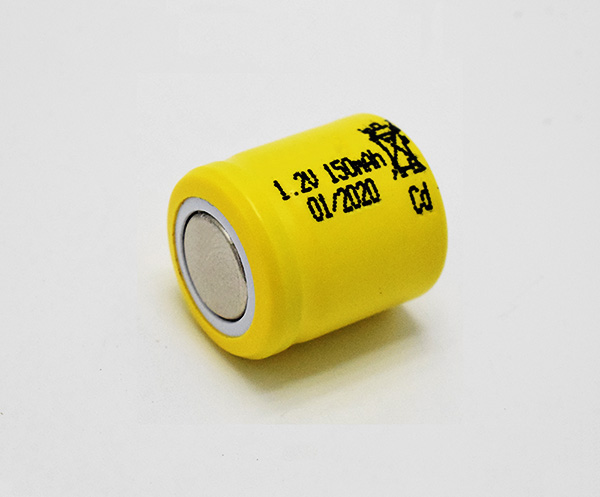
For example, a three-cell Ni-Cd pack typically has a nominal voltage of 3.6 V because each cell is rated at approximately 1.2 V. However, matching the nominal voltage alone is not enough when replacing a battery.
You must also confirm the capacity, dimensions, connector, polarity, charging compatibility, and operating-temperature rating.
Godson Technology Co., Ltd. offers Ni-Cd battery options for applications such as emergency lighting. When evaluating a cell or pack, check the exact model specification rather than assuming that all Ni-Cd batteries share the same charging requirements.
For example, a 1.2 V, 600 mAh Ni-Cd cell has a nominal capacity of 600 mAh. If its datasheet specifies standard charging at 0.1C for 16 hours, the corresponding charging current is 60 mA. These figures apply only to that specified cell and charging method, not to every emergency lighting battery pack.
An emergency lighting battery normally spends much of its service life connected to a charger. This makes charging compatibility and temperature important factors in long-term reliability.
Confirm that the charger is designed for Ni-Cd chemistry.
Measure the charging voltage and current where the manufacturer's procedure permits.
Check for loose connectors, corrosion, damaged wiring, or abnormal heating.
Confirm that the battery is suitable for the temperature inside the luminaire.
Check whether recent power interruptions have prevented the battery from completing its recharge.
Do not increase the charging voltage or use a fast charger simply because the battery appears to have lost capacity. Excessive charging can generate heat and accelerate deterioration.
For installations near ceilings, industrial equipment, or other heat sources, check the actual battery temperature rather than relying solely on the room thermostat.
Before attempting to correct a suspected memory effect, measure the battery's existing performance.
First, allow the battery to charge fully according to the manufacturer's instructions. Next, test the emergency lighting under its specified load and record the starting voltage, discharge behavior, and operating duration.
Compare the results against the rated emergency duration and the applicable local requirements.
For example, a system designed to provide 90 minutes of emergency illumination should be evaluated against that specified duration if it applies to the installation. A short button test that confirms the lamp switches on does not establish that the battery can sustain the load for the full required period.
IEC 62034:2012 specifies that, for automatic test systems within its scope, monthly functional tests should be long enough to verify operation but no longer than 10% of the rated duration. It also provides for full-rated-duration testing at commissioning and at least annually. National regulations and the applicable equipment instructions must also be checked.
Repeated shallow discharge means using only part of the battery's available capacity before recharging it.
A pattern of repeated partial cycling can contribute to voltage-related performance changes in certain Ni-Cd cells. However, that does not mean normal, short emergency-lighting functional tests should be abandoned.
Instead, distinguish between required safety testing and unnecessary additional discharge cycles.
Perform the required functional tests at the specified intervals.
Avoid repeatedly activating emergency mode for extended periods without a maintenance reason.
Allow sufficient time for the battery to recharge after a duration test or real power outage.
Avoid scheduling successive full-duration tests before the specified recharge period has elapsed.
The objective is to maintain emergency readiness while limiting avoidable battery wear.
If the charging system is functioning correctly and the manufacturer confirms that conditioning is suitable for the specific battery, one controlled discharge and recharge cycle may help address a suspected voltage-depression problem.
Fully charge the battery. Use the approved charging procedure and allow the specified charging time.
Connect a controlled load. Use a suitable battery analyzer or discharge tester.
Monitor the discharge. Observe the battery voltage and discharge behavior throughout the test.
Stop at the specified cutoff. Never discharge the battery pack to zero volts or continue discharging after the manufacturer's prescribed limit.
Recharge completely. Use the approved charging method and allow sufficient recovery time.
Compare the results. Repeat the duration test under the same load and compare the results with the baseline.
This precaution is especially important for series-connected cells. If one weak cell becomes fully discharged before the others, continued current can force it into reverse charging, potentially causing permanent damage.
Conditioning is not a permanent solution for every charging-related voltage effect. In standby applications, the underlying charging conditions may cause the effect to return. If the battery continues to fail its duration test, investigate its capacity, charger, and age rather than repeatedly cycling it.
After testing, record the battery model, installation date, ambient temperature, charging conditions, discharge duration, cutoff voltage, and any faults discovered.
Compare each new result with the previous test rather than judging battery condition from a single voltage reading.
If the battery repeatedly fails the required duration test after correct charging and appropriate troubleshooting, replacement may be necessary.
For a series-connected pack, replacing the complete matched pack is often preferable to mixing a new cell with older cells of different capacities and internal resistance. Confirm the replacement specification and charger compatibility before returning the luminaire to service.
A historical discussion on the FireNet Community forum examined emergency lighting battery replacement and the difficulty of deciding when Ni-Cd batteries should be replaced. One contributor reported that, at a site where fittings were more than a couple of years old, approximately 20% were being replaced each year. Other participants emphasized the importance of duration-test results and manufacturer guidance.
This is a historical practitioner account, not a controlled study. The 20% figure should not be treated as a universal failure rate or as proof that memory effect caused those replacements.
Nevertheless, the discussion illustrates an important maintenance lesson: a battery that still illuminates an emergency lamp during a short test may not provide the required backup duration.
Consider a facility manager who notices that several emergency lights switch on normally but fail during full-duration testing. The sensible response is not to deep-discharge every battery in the building. It is to identify the affected units, verify the charger, perform controlled testing, and determine whether the problem is inadequate charging, voltage depression, aging, or a defective battery.
That approach helps prevent unnecessary maintenance cycles and makes battery replacement decisions easier to justify.
| Common Mistake | Why It Causes Problems | Better Solution |
|---|---|---|
| Fully discharging every battery every month | Adds unnecessary cycling and may over-discharge weak cells. | Follow the approved functional-test schedule. |
| Assuming every short runtime indicates memory effect | Aging, charging faults, and voltage depression can produce similar symptoms. | Measure runtime and investigate the charging circuit. |
| Using a generic charger | Incorrect charging voltage or current can damage the battery. | Use a compatible charger and the specified charging method. |
| Boost-charging a weak battery without diagnosis | Excessive charging can increase heat and deterioration. | Check the manufacturer's charging limits first. |
| Testing only open-circuit voltage | A battery may show normal voltage but have inadequate capacity under load. | Conduct a controlled discharge or rated-duration test. |
| Ignoring battery temperature | Elevated temperature can accelerate capacity loss. | Check the actual operating environment and use appropriately rated cells. |
| Repeatedly conditioning an aging battery | Conditioning does not reverse normal aging or repair defective cells. | Replace the pack if it cannot meet its rated performance. |
Preventing memory effect is less about repeatedly emptying a battery and more about controlling how it is charged, tested, and maintained.
For reliable emergency lighting Ni-Cd battery maintenance, use the correct charger, avoid unnecessary discharge cycles, allow complete recharge between tests, monitor battery temperature, and investigate abnormal runtime before attempting conditioning.
The three most useful measurements are discharge duration, loaded voltage, and recharge performance. Together, they provide a more reliable basis for assessing battery capacity and emergency backup runtime than an open-circuit voltage reading alone.
For manufacturers, distributors, and maintenance contractors, Godson Technology Co., Ltd. offers Ni-Cd battery options for emergency lighting applications. When selecting replacement packs, confirm the required voltage, capacity, configuration, temperature rating, and charging specifications.
Ultimately, a manufacturer-approved Ni-Cd battery conditioning procedure should be used only when appropriate. Monitoring charge retention, depth of discharge (DoD), and voltage depression—while following the required testing schedule—is a more dependable strategy than routinely deep-discharging every emergency lighting battery.
No. Do not assume that monthly full discharge is necessary to prevent memory effect. Follow the applicable safety regulations and battery manufacturer's instructions. Monthly functional checks and periodic rated-duration tests serve different purposes.
A suitable controlled discharge and recharge cycle may improve some voltage-related performance problems when the manufacturer permits it. However, it cannot reverse normal battery aging or repair a defective cell. Test the battery before and after conditioning to establish whether performance has improved.
Start with a full charge, inspect the charger, and perform a controlled discharge test. Compare the operating duration and loaded voltage with the battery specification and previous test records. If the battery still fails after the charging system and test conditions have been verified, aging or cell deterioration may be responsible.
Use the cutoff specified by the battery manufacturer for the exact cell or pack and discharge conditions. A cutoff suitable for one cell model may not be appropriate for another. Never use zero volts as a target for routine conditioning.
High temperature is a significant factor in Ni-Cd battery aging and may accelerate capacity loss, particularly in continuously charged emergency lighting fixtures. A battery that loses runtime in a hot luminaire should be checked for charging and temperature-related deterioration rather than automatically being diagnosed with memory effect.
Replace the battery when it cannot meet the required emergency operating duration after appropriate charging and troubleshooting, or when inspection identifies a defect that makes continued use unsafe. Follow the applicable maintenance requirements and manufacturer guidance rather than relying on a universal replacement age.


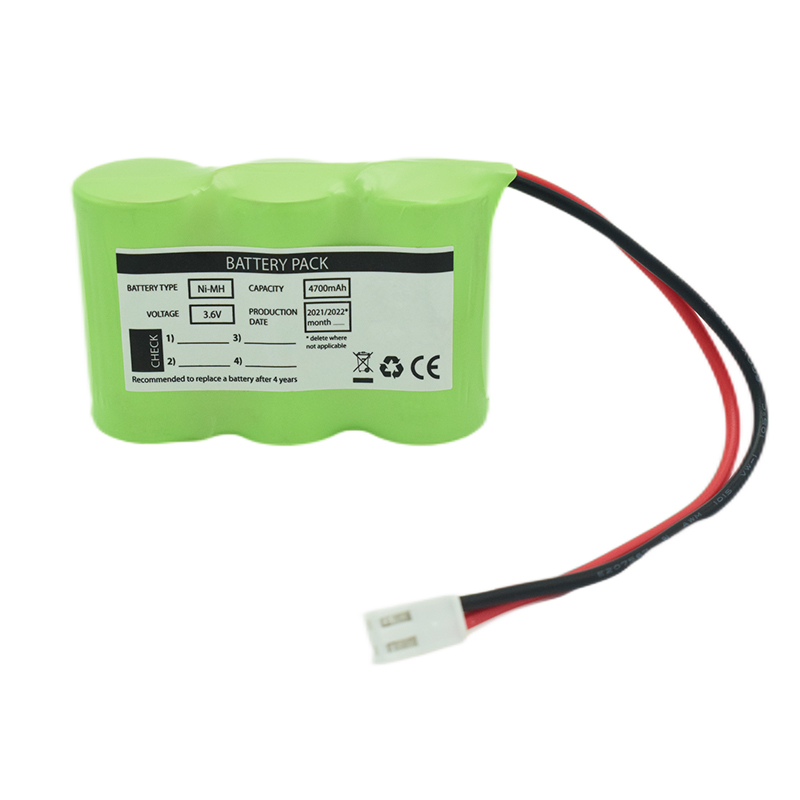 Ni-MH Battery C4700mAh 3.6V
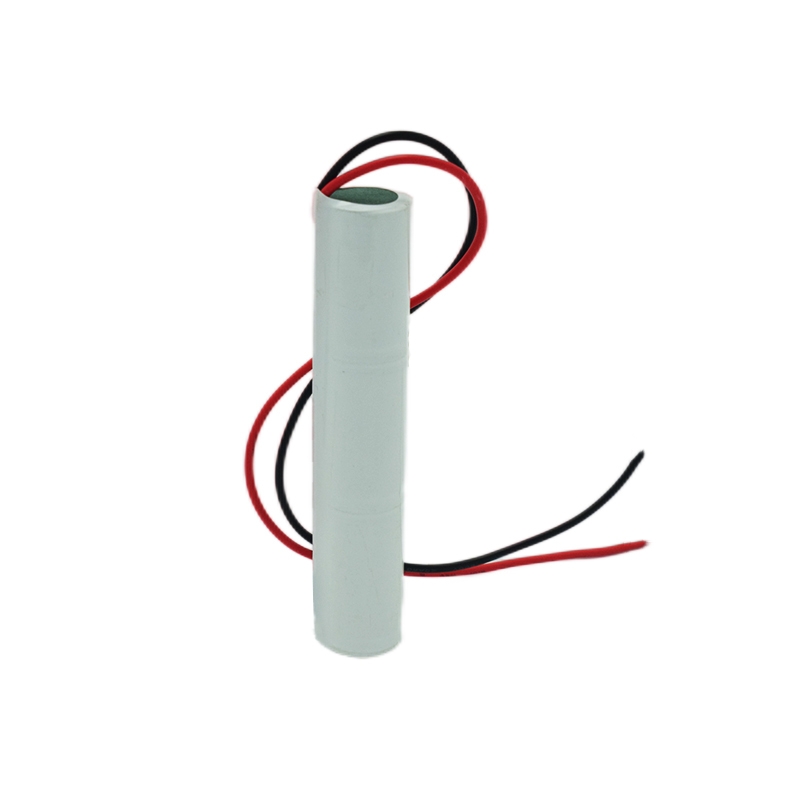 Nickel Cadmium Nicd Battery Pack SC1800mAh 3.6V
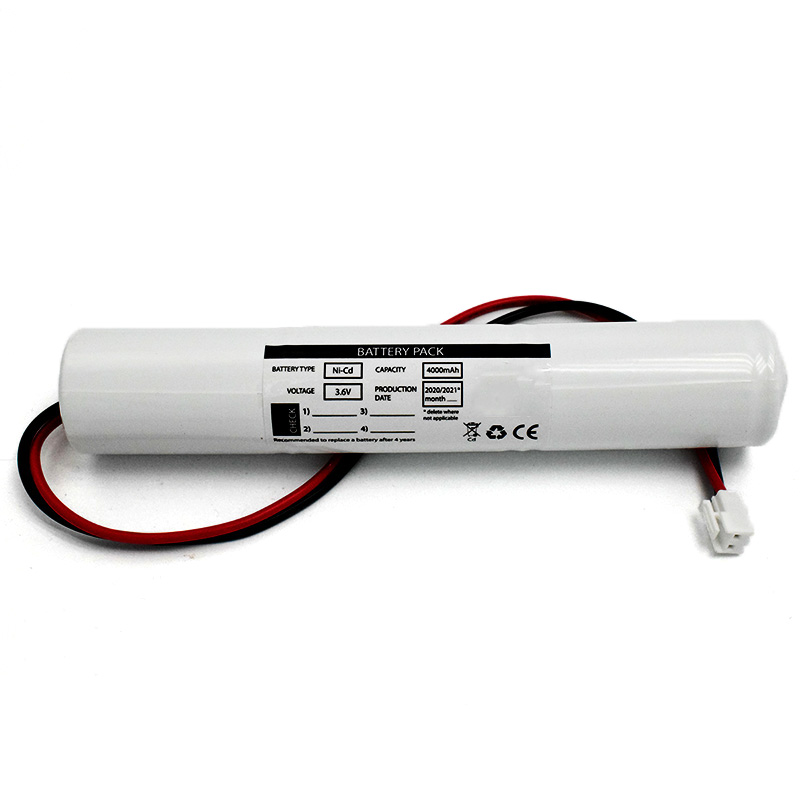 Ni-Cd Battery Pack D4000mAh 3.6V
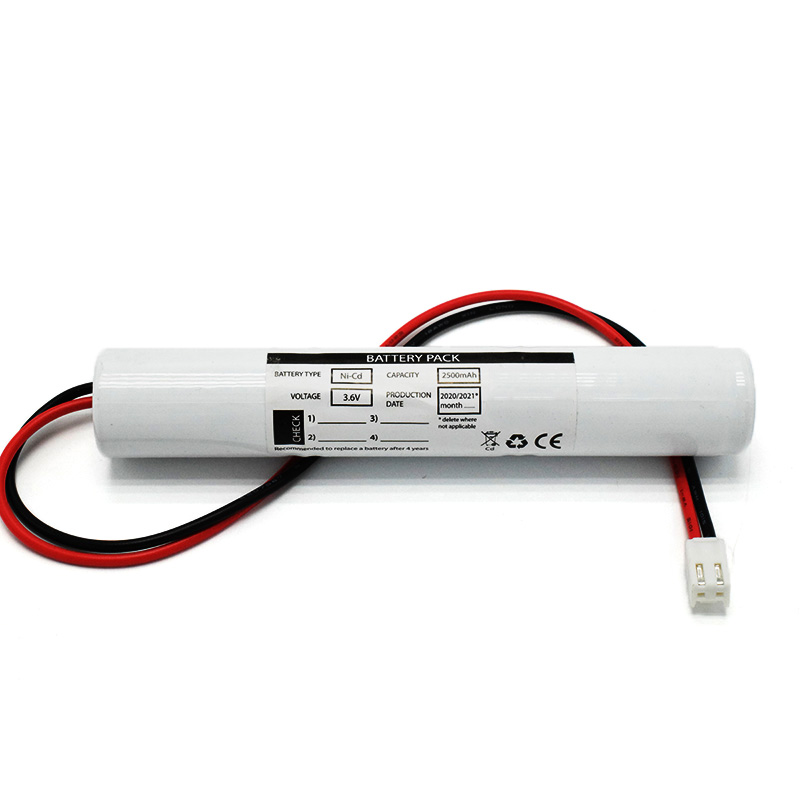 Ni-Cd Battery Pack C2500mAh 3.6V
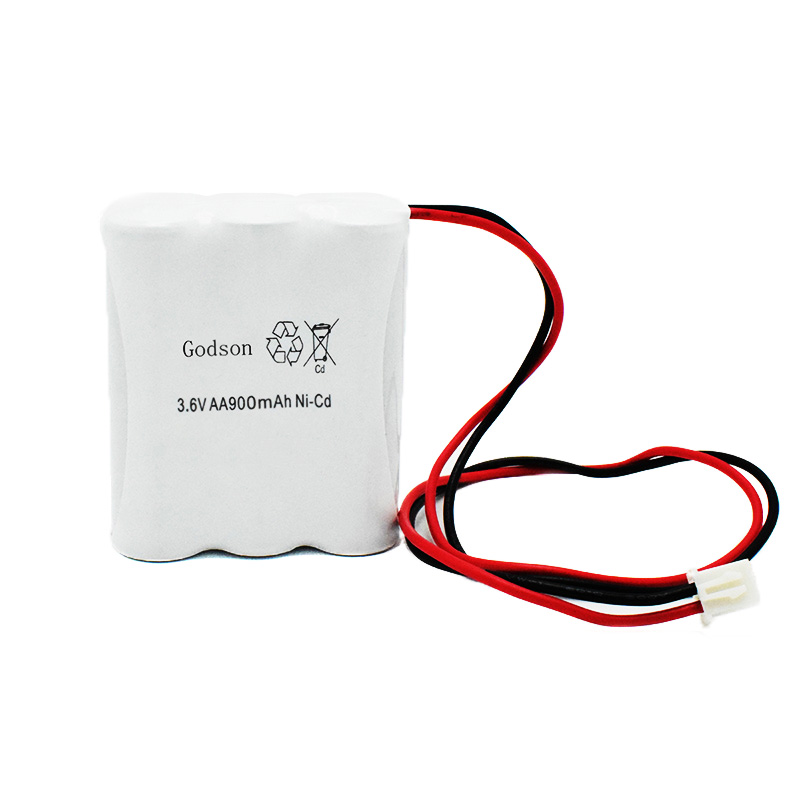 NICAD Battery Pack AA900mAh 3.6V
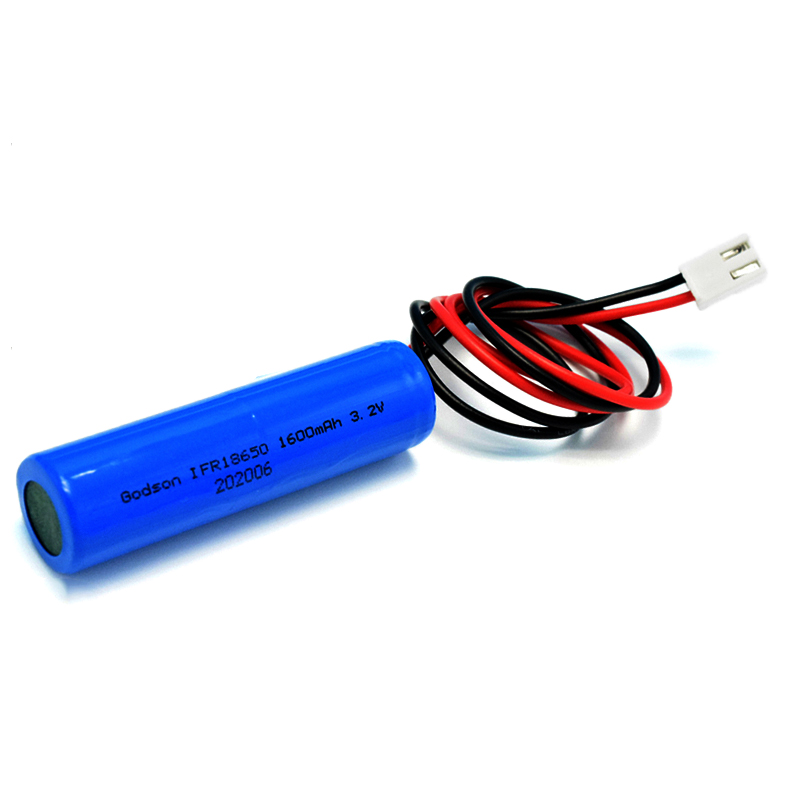 LiFePO4 IFR18650 1600mAh 3.2V
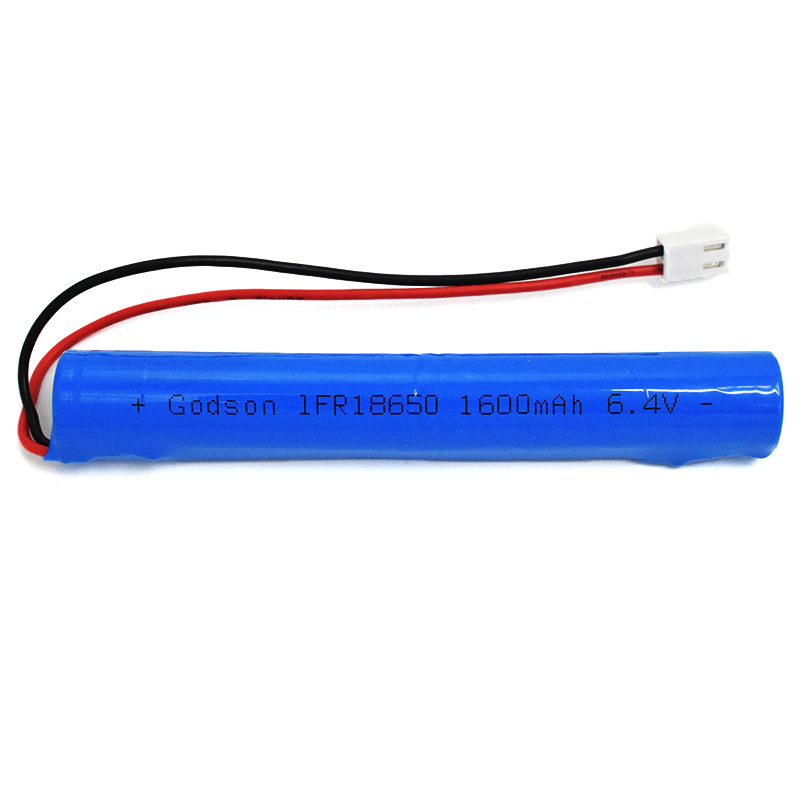 LiFePO4 IFR18650 1600mAh 6.4V
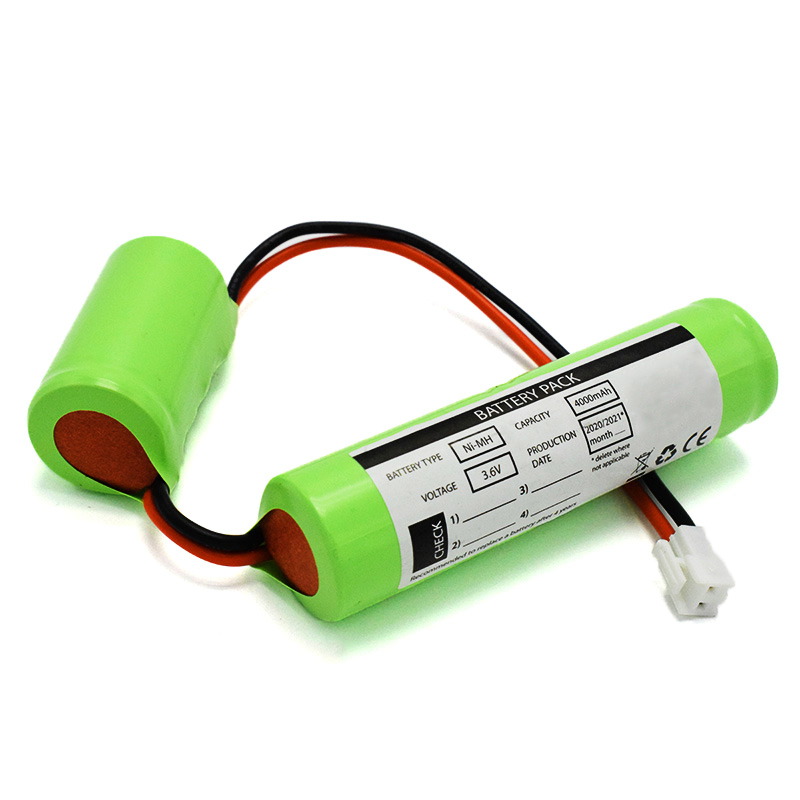 Ni-MH Battery C4000mAh 3.6V
 E-bike Battery 48V 10Ah JL-1
 E-bike battery 48V 10Ah Qing Tian