




Emergency lighting systems depend on rechargeable batteries to provide illumination when the normal power supply fails. In many self-contained emergency luminaires, nickel-cadmium batteries remain continuously connected to a charging circuit and may stay on standby for months before being discharged.
Although Ni-Cd batteries are known for their durability, charging cycles still affect their capacity, operating time, reliability, and eventual replacement interval. However, battery life cannot be predicted simply by counting how many times the battery has been charged.
The depth of each discharge, charging current, charging voltage, temperature, recharge time, luminaire design, and battery quality are often more important than the number of cycles alone.
Understanding these factors helps building operators, emergency lighting manufacturers, maintenance contractors, and battery buyers choose suitable batteries and establish an effective testing schedule.
A charging cycle consists of discharging a rechargeable battery and then restoring the discharged capacity through charging.
One complete charging cycle does not always mean that the battery was discharged from 100% capacity to empty in a single operation. Several partial discharges may together produce approximately one equivalent full cycle.
For example:
· Four discharges of approximately 25% capacity represent roughly one full-cycle equivalent.
· Two discharges of approximately 50% capacity represent roughly one full-cycle equivalent.
· One full-duration emergency lighting test may create a relatively deep discharge cycle.
However, this calculation only provides a general reference. Two batteries with the same number of equivalent cycles may age differently because they were operated at different temperatures or charged using different control systems.
For an emergency lighting Ni-Cd battery, a typical operating pattern includes:
1. Continuous standby or trickle charging.
2. Short functional tests.
3. Periodic full-duration discharge tests.
4. Occasional discharges caused by actual power failures.
5. Recharging after each test or emergency operation.
Therefore, emergency lighting batteries experience both cycle aging and calendar aging.
Cycle aging is the gradual deterioration caused by repeated discharge and recharge operations. Calendar aging occurs while the battery remains installed, even when few discharges take place.
This distinction is particularly important in emergency lighting.
A battery installed in a building may experience only a small number of major power failures. Nevertheless, it remains connected to the charger continuously, often inside a warm luminaire enclosure. The battery can therefore lose capacity because of prolonged exposure to heat and continuous overcharge conditions, even when its cycle count remains low.
For this reason, a lightly cycled emergency lighting battery is not necessarily a healthy battery.
Small high-temperature Ni-Cd packs designed for self-contained luminaires may have a much shorter service life than large industrial stationary Ni-Cd systems. Yuasa, for example, lists an emergency-lighting service life of up to four years for certain YU-Lite Ni-Cd packs, while specialized extended-life cells may be designed for longer operation. Large stationary Ni-Cd systems used in critical infrastructure can have operating lives exceeding 20 years under suitable conditions. These product categories should not be compared directly.
Every discharge and recharge causes electrochemical changes inside the cells. A correctly designed Ni-Cd battery can tolerate many cycles, including relatively deep discharges, but repeated cycling eventually changes the electrodes, increases internal resistance, and reduces usable capacity.
As the battery ages, several changes may become noticeable:
· The emergency operating time becomes shorter.
· Battery voltage falls more quickly under load.
· The pack takes longer to recover after a test.
· Individual cells become less balanced.
· Charging temperature may increase.
· The emergency luminaire may fail its rated-duration test.
The effect normally develops gradually. A battery may continue to illuminate the lamp during a short monthly test but fail before completing a one-hour or three-hour duration test.
This is why a short functional test alone cannot confirm that the battery still has sufficient capacity.
After an emergency operation or full-duration test, the battery must receive enough time and charging current to restore its capacity.
When another discharge occurs before recharge is complete, the battery starts with less available energy. The emergency lighting duration will therefore be shorter, even when the battery itself has not reached the end of its physical life.
Repeated partial recharging can also make it difficult for the cells in a series-connected pack to remain balanced. Weaker cells may reach a low voltage earlier than healthier cells during the next discharge.
This situation is common when:
· Full-duration tests are scheduled too close together.
· Frequent power interruptions occur.
· The charger is undersized.
· The charging current has fallen below specification.
· A replacement battery has a larger capacity than the original charger was designed to support.
· The luminaire is restored to service before the required recharge period has passed.
Emergency lighting tests should therefore be scheduled when sufficient time is available for the batteries to recharge and when alternative safety arrangements can be provided if necessary. Public emergency-lighting guidance commonly calls for short functional checks and a full annual duration test, with the full test performed under controlled conditions while the system recovers afterward. Exact requirements depend on the applicable national regulations, risk assessment, system type, and manufacturer instructions.
Emergency luminaire batteries usually remain under continuous charge. This ensures that the battery is ready when the mains supply fails, but it also means that charge control must be carefully matched to the cell design.
When the charging current or voltage is too high, excessive energy is converted into heat and gas generation after the battery reaches full charge. Over time, this can accelerate electrolyte loss, separator deterioration, seal stress, and capacity decline.
When the charging level is too low, the battery may never reach full capacity.
For vented stationary Ni-Cd batteries, EnerSys recommends defined float, boost, and single-level charging voltage ranges, and notes that high water consumption is commonly associated with an improper charger-voltage setting. The exact figures are product-specific and should not be applied directly to sealed emergency-lighting packs, but the underlying principle remains the same: charger settings must match the battery specification.
A battery advertised as having excellent cyclic performance can still fail prematurely when continuously charged by an unsuitable circuit.
Temperature is one of the most important factors affecting emergency lighting battery life.
Emergency luminaires are often installed:
· Close to ceilings where warm air accumulates.
· Inside compact enclosures with limited ventilation.
· Near LED drivers and other heat-producing components.
· In warehouses, factories, kitchens, plant rooms, or boiler rooms.
· Above suspended ceilings with restricted airflow.
High temperatures accelerate chemical reactions inside the cells. During charging, they may also increase battery temperature further. Over an extended period, this can reduce capacity and shorten service life, even when the battery completes only a limited number of discharge cycles.
EnerSys states that elevated electrolyte temperature has a detrimental effect on Ni-Cd cell function and duration and recommends interrupting charging if electrolyte temperature exceeds the specified limit for the referenced industrial batteries. The manufacturer also notes that low temperature can cause a temporary reduction in available capacity.
Emergency lighting applications should therefore use high-temperature Ni-Cd cells specifically designed for continuous charging. ARTS Energy, for example, offers Ni-Cd cells intended for permanent-charge emergency lighting applications at temperatures up to 55°C.
Using a standard consumer Ni-Cd cell in place of an emergency-lighting-grade cell can result in poor charging compatibility and premature failure.
Properly conducted short functional tests normally produce only a shallow discharge and should not cause significant cycle wear.
These tests are necessary because they can reveal problems such as:
· Lamp or LED module failure.
· Charger failure.
· Broken wiring.
· Loose battery connections.
· Damaged test switches.
· Incorrect changeover operation.
However, a short test cannot accurately measure available battery capacity. A degraded battery may illuminate the emergency lamp for several minutes but fail during a real evacuation or full-duration test.
The best maintenance program therefore combines frequent functional checks with less frequent rated-duration testing.
Battery manufacturers may also specify limits for cycling frequency. One ARTS Energy high-temperature Ni-Cd cell intended for emergency lighting lists a maximum of one discharge per month for its emergency-lighting application conditions, demonstrating why unnecessarily frequent deep tests should be avoided.
Excessive Charging Current
A charging current above the approved level can produce excessive heat, increase gas generation, and accelerate aging.
Insufficient Charging Current
A low charging current may prevent the battery from recovering fully between tests or outages.
Incorrect Charging Voltage
A voltage that is too high promotes overcharge and heat. A voltage that is too low leaves the battery undercharged.
No Temperature Compensation or Thermal Control
In poorly designed systems, the same charging conditions may be applied regardless of ambient temperature. This can increase stress in warm environments.
Incompatible Replacement Battery
Installing a pack with the correct voltage but the wrong cell chemistry, capacity, temperature rating, or charge acceptance can create serious performance problems.
Poor Cell Matching
Cells connected in series should have closely matched capacities and internal resistance. One weak cell can limit the operating time of the whole battery pack.
Follow the Approved Test Schedule
Carry out required functional and duration tests, but avoid unnecessary full discharges.
Allow Complete Recharging
Do not conduct another full test until the battery has completed the manufacturer-specified recharge period.
Control Operating Temperature
Keep luminaires away from avoidable heat sources and ensure that ventilation openings are not blocked.
Verify the Charger Output
Measure charging voltage and current periodically and compare the results with the luminaire and battery specifications.
Use Emergency-Lighting-Grade Cells
Select cells designed for continuous charge and elevated-temperature operation.
Replace the Complete Pack
Replacing only one weak cell in an aged series pack may create capacity imbalance. For most small self-contained luminaires, replacing the complete pack is the more reliable approach.
Record Test Results
Maintain a log of functional tests, duration tests, faults, battery replacements, and recharge periods. Historical records help identify gradual reductions in operating time.
Battery life begins with product selection.
A low-cost pack may have the correct voltage and fit inside the luminaire but still use cells that are not designed for permanent charging at elevated temperatures. The result may be rapid capacity loss, repeated maintenance visits, failed inspections, and higher total replacement costs.
For OEM and bulk purchasing projects, buyers should ask suppliers for:
· Cell manufacturer and model.
· Rated capacity and minimum capacity.
· Continuous-charge conditions.
· Maximum operating temperature.
· Recommended discharge frequency.
· Expected service life in emergency lighting.
· Pack drawing and dimensional tolerances.
· Connector and polarity information.
· Test reports and compliance documents.
· Production traceability.
· Capacity-matching and pack-inspection procedures.
The expected life claim should always be linked to defined operating conditions. A statement such as “four-year life” or “eight-year life” is meaningful only when temperature, charging method, discharge frequency, load, and end-of-discharge voltage are specified.
Charging cycles affect emergency lighting Ni-Cd battery life, but the number of cycles is only one part of the picture.
Deep discharge, incomplete recharge, excessive testing, high temperature, continuous overcharge, unsuitable charging voltage, and incompatible replacement cells can all reduce usable battery capacity. In many self-contained emergency luminaires, heat and continuous-charge conditions may have a greater effect on service life than the actual number of emergency operations.
A reliable maintenance strategy should combine scheduled functional testing, periodic duration testing, adequate recharge time, charger inspection, temperature control, accurate recordkeeping, and timely battery replacement.
For equipment manufacturers and bulk buyers, choosing high-temperature Ni-Cd cells specifically developed for emergency lighting is essential. Correct voltage, capacity, configuration, connector, charging compatibility, and traceability should all be confirmed before approving a replacement battery pack.


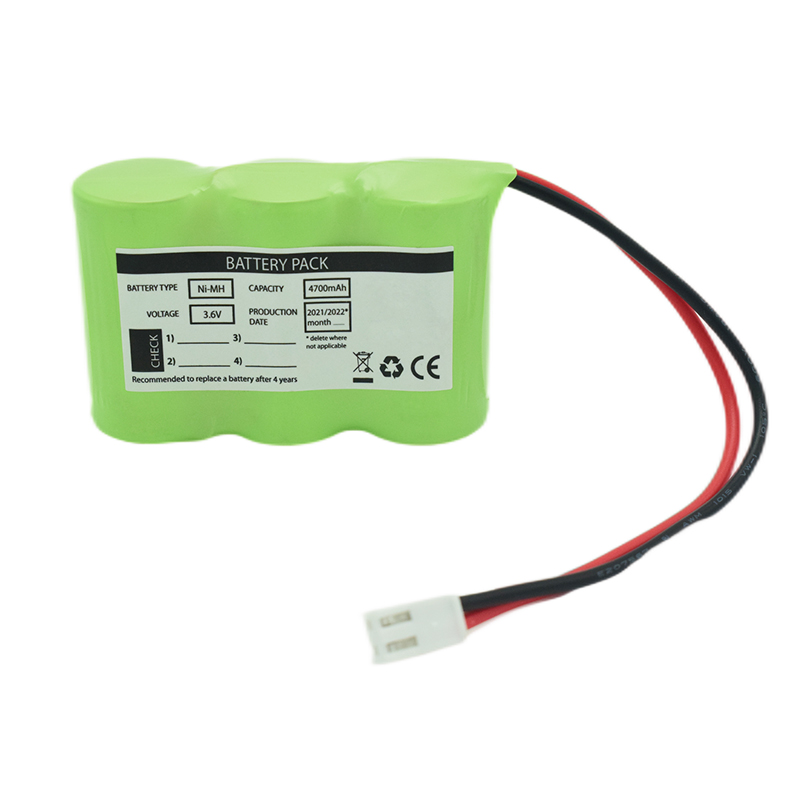 Ni-MH Battery C4700mAh 3.6V
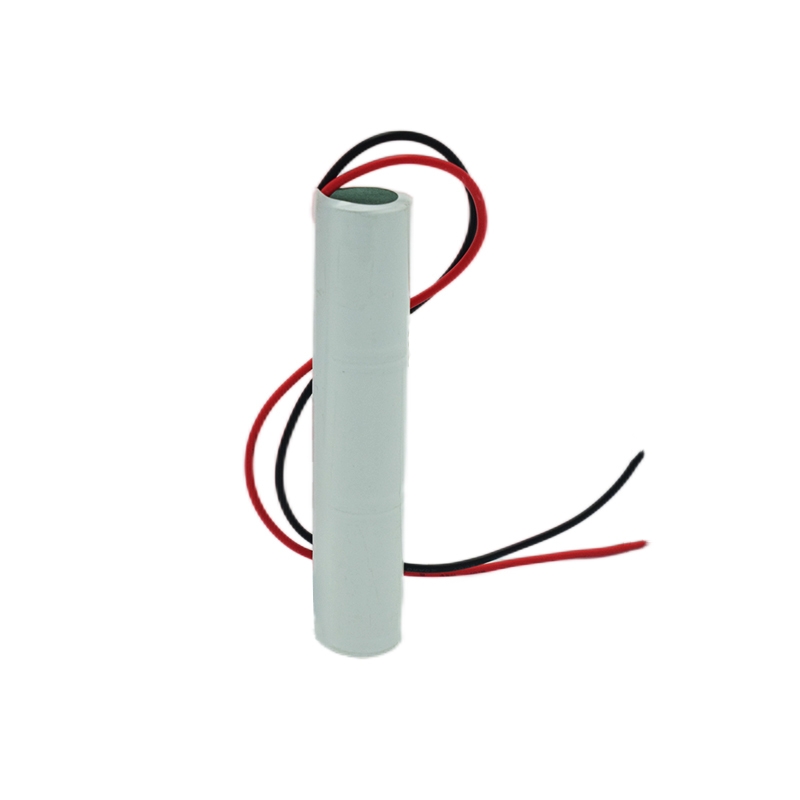 Nickel Cadmium Nicd Battery Pack SC1800mAh 3.6V
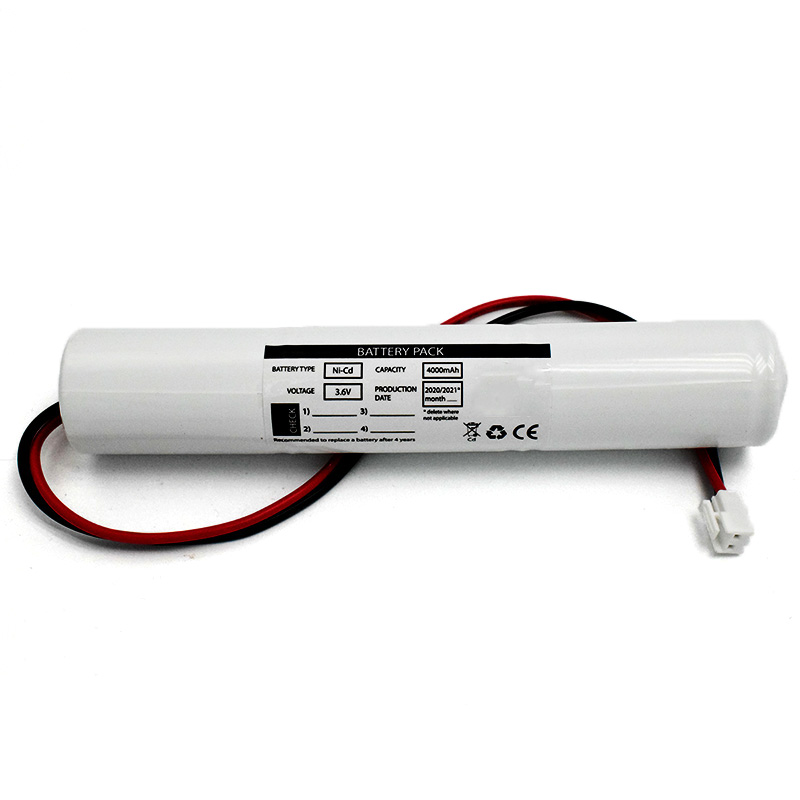 Ni-Cd Battery Pack D4000mAh 3.6V
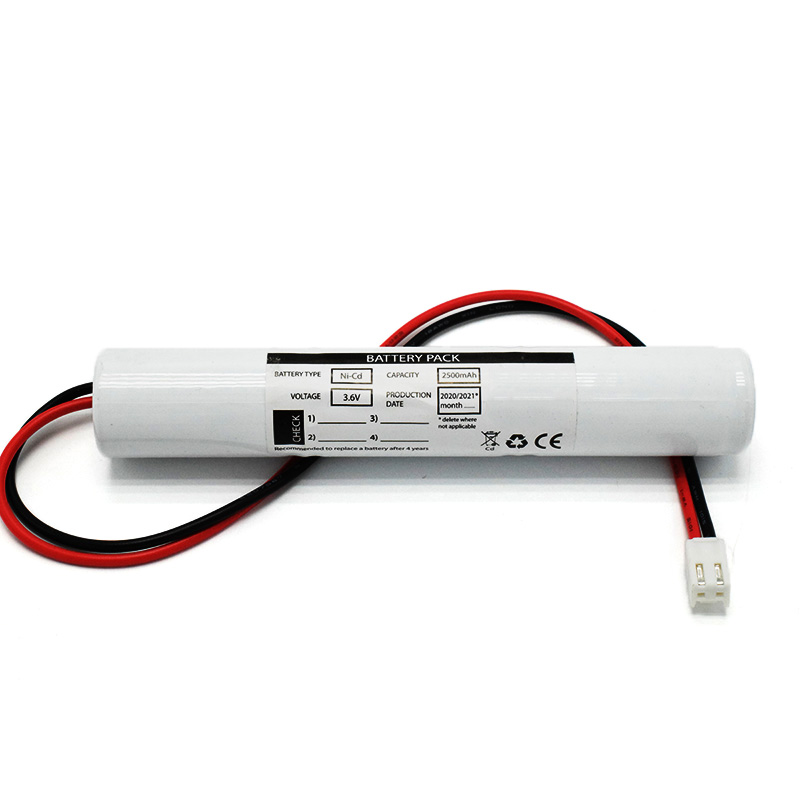 Ni-Cd Battery Pack C2500mAh 3.6V
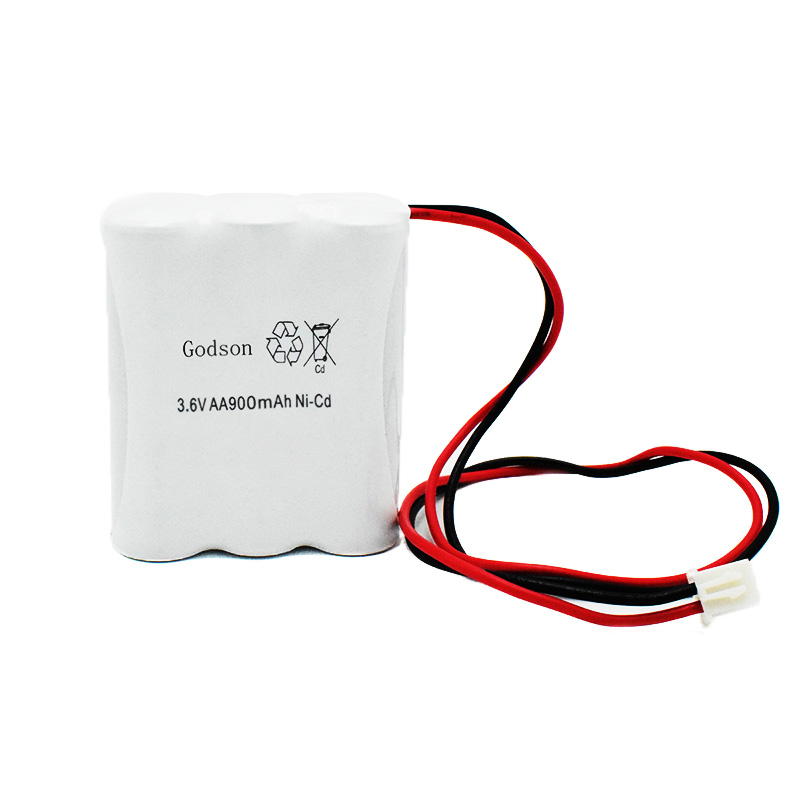 NICAD Battery Pack AA900mAh 3.6V
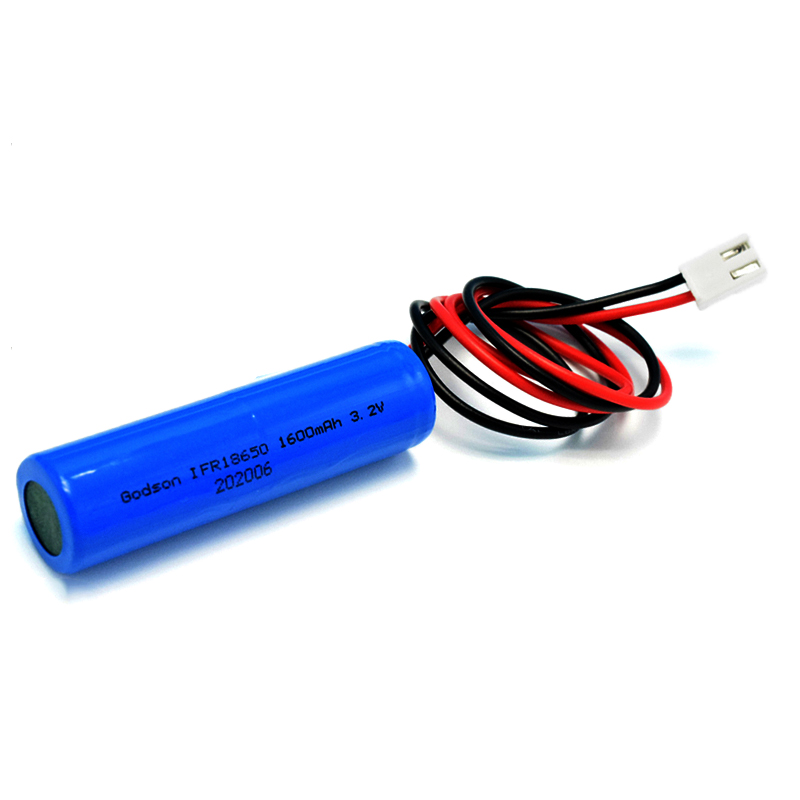 LiFePO4 IFR18650 1600mAh 3.2V
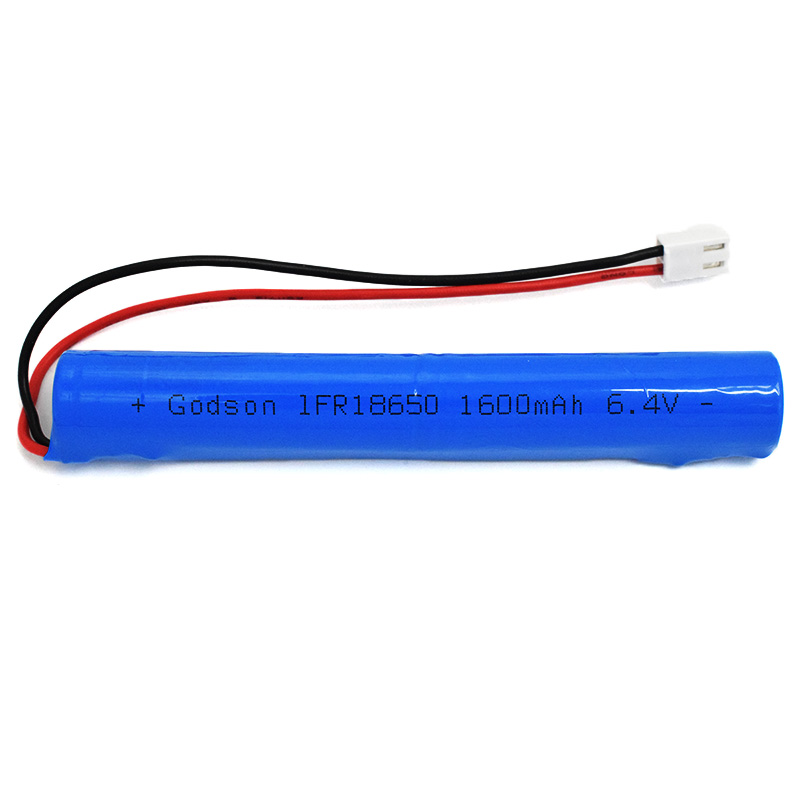 LiFePO4 IFR18650 1600mAh 6.4V
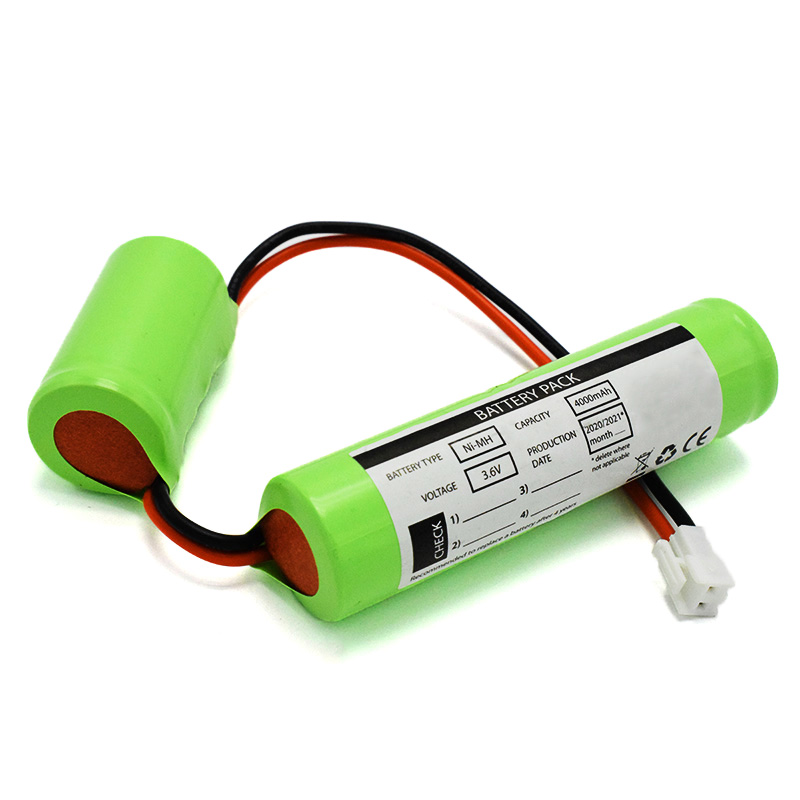 Ni-MH Battery C4000mAh 3.6V
 E-bike Battery 48V 10Ah JL-1
 E-bike battery 48V 10Ah Qing Tian